

Halter at $2 Billion: What “Cow Collars” Can Teach Us About Raising Your First Deeptech Round
Halter CEO Craig Piggott’s practical playbook for raising a first round around a non-obvious deeptech idea

Halter today announces a new $220 million financing at a $2 billion valuation. That’s a big milestone tied to going live on 1 million cows around the world. But if you’ve followed Halter for a while, you know this story didn’t start with traction, metrics, or a clean SaaS pitch.
It started with an idea that sounded… unusual: collars for cows.
We recently sat down with Craig for a Ubiquity University module on raising your first round as a deep tech founder. His advice is refreshingly practical—no jargon, no theatrics, just lessons earned the hard way. Watch our 16-minute Ubiquity University module now — “Raising your First Round for your Deeptech idea with Halter CEO Craig Piggott”:
Our journey with Halter
We first met Craig Piggott in a Palo Alto coffee shop in 2018. Ubiquity co-led Halter’s seed round just a few days thereafter. At the time, there was no playbook for what he was building—no obvious comps, no clear category. Just a sharp founder, a deeply personal connection to the problem, and a willingness to explain, over and over again, why this mattered.

If you want the full arc, we’ve written about it in the past:
In 2021, when Halter raised $23M, we focused on early conviction: Backed by $23 million of fresh capital: Craig Piggott, Founder of Halter
In 2025, when Halter became a unicorn, we unpacked how a “weird” idea became inevitable: Did You Just Say “Cows”? How Halter Became a Unicorn by Reimagining Livestock Management
Today’s announcement is another milestone on that journey. But the real lesson is how Halter raised its first round when the idea still sounded strange. That’s exactly what our new Ubiquity University module with Craig unpacks.
The Truth About Deeptech Fundraising
At Ubiquity, we live at the earliest stage. A third of the companies we back, we invest the day they’re incorporated—no revenue, no metrics, often not even a product.
And when the idea is off the beaten path—our angle is what we call “software beyond the screen”—the fundraising looks very different. You’re not just pitching a company. You’re teaching a new way of seeing the world.
That’s exactly what Craig had to do.
Ubiquity University: Craig’s Playbook for Raising Your First Round
We’ve summarized some of Craig’s best tips here, but we still recommend watching the full interview on Ubiquity University.
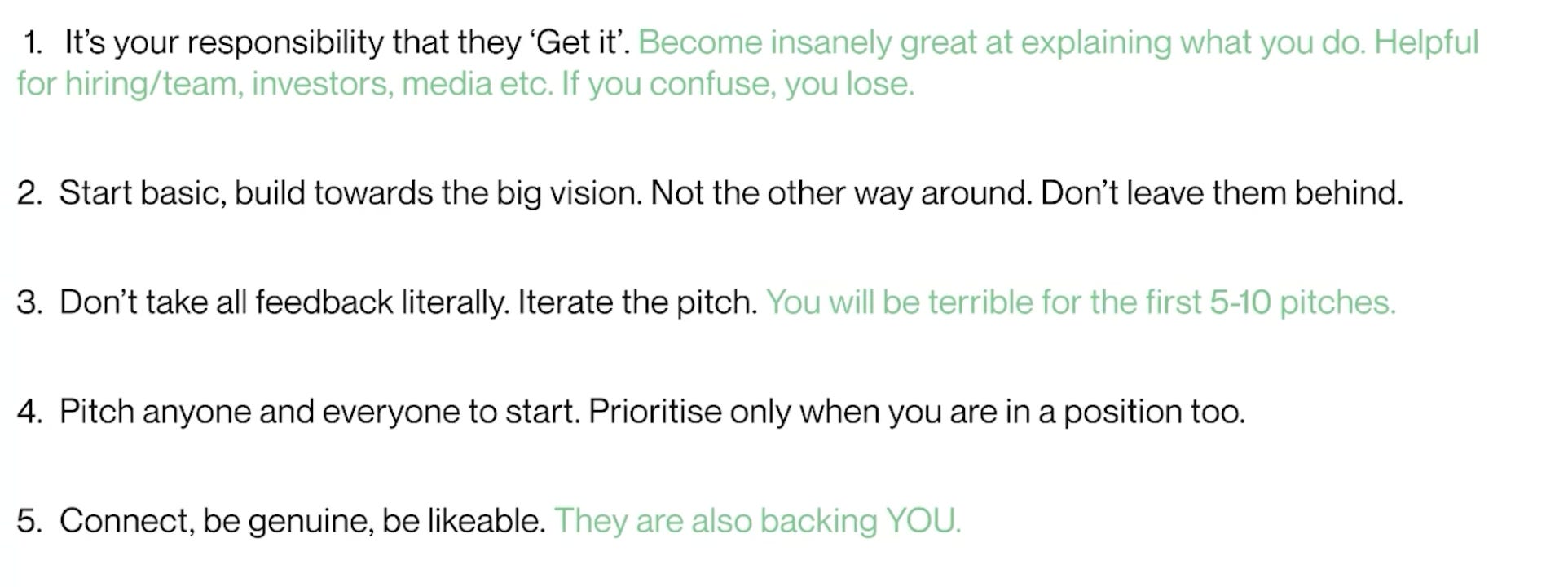
1) It’s your job to make people understand.
If your idea is novel or confusing, that’s not the investor’s problem—it’s yours. Early on, Craig saw investors misunderstand Halter constantly. The instinct is to blame the audience — but that’s wrong; the better move is to simplify the explanation, then simplify it again, until it clicks.
2) Start simple. Earn the right to get complex.
Deep tech founders often lead with sophistication and big vision. That’s a mistake. Craig learned to begin with something almost anyone could grasp—“we help farmers move cows without fences”—and then layer in complexity. Clarity isn’t dumbing it down; it’s widening the funnel.
3) You don’t have leverage (yet).
As Craig puts it, “you don’t have any leverage until you have a term sheet.” Early founders sometimes try to balance the power dynamic too soon. At the beginning, your job is to communicate clearly, be responsive, and build momentum. Leverage is earned, not assumed.
In a past post, we dove into this idea of when you do and when you don’t have leverage: “0, 1, and ∞ (Infinity): The Only Three Numbers That Matter to Entrepreneurs and Astronomers”
4) Pitch broadly. Iterate fast.
By the end of a round, Craig estimates they were on version 15 or 20 of their pitch. That’s not a failure—that’s the process. Every conversation sharpens the story: where people get confused, where they lean in, what questions repeat. Early on, you don’t get selective; you get better.
5) Show, don’t tell.
Especially for real-world systems, words aren’t enough. Photos, videos, demos—anything that helps someone see what you’re building—can unlock understanding instantly. For Halter, this was critical.

6) Investors are backing you, not just the idea.
At the earliest stage, everything will change—the product, the pitch, even the market. What endures is the founder. Craig’s authenticity and depth of understanding mattered far more than polish.
Why This Matters
It’s tempting to look at Halter today—over a million cows on the platform and a $2B valuation—and assume the path was obvious.
It wasn’t. It rarely is for ideas that matter.
The uncomfortable truth is that many off-the-beaten-path ideas fail not because they’re wrong, but because they’re poorly explained.
At Ubiquity, our job is to back those ideas before they’re obvious. But just as importantly, it’s to help founders tell their story in a way the world can actually understand—so those ideas have a real chance to reach their full potential.
We’re excited about today’s milestone. But the part we care about most is what comes next: the next founder with an idea that sounds just as strange as “cow collars” once did—and the chance to help them bring it to life.
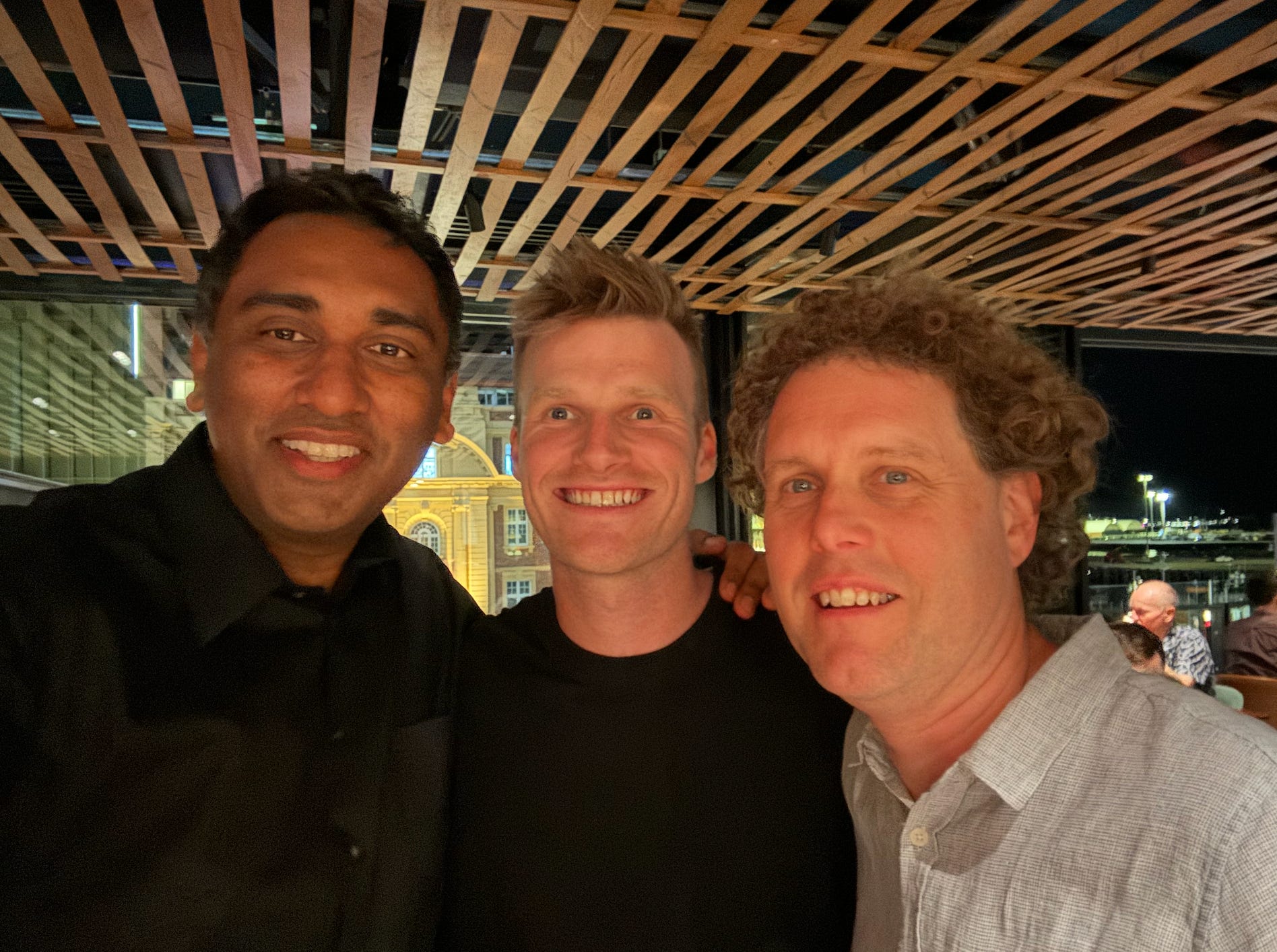
Ubiquity Ventures — led by Sunil Nagaraj — is a seed-stage venture capital firm focused on startups building software that reaches into the real world. In a screen-obsessed world, we focus on "software beyond the screen" startups, which include technology companies that apply AI, software, and smart hardware to physical problems and systems that you can touch, hear, and feel.
If your startup fits this description, reach out to us.