

The Keck Telescope: What Happens When Deep Tech Meets the Real World
How a volcano, software, and human grit combine to build a 10-meter eye on the universe

There are telescopes, and then there is the W. M. Keck Observatory.
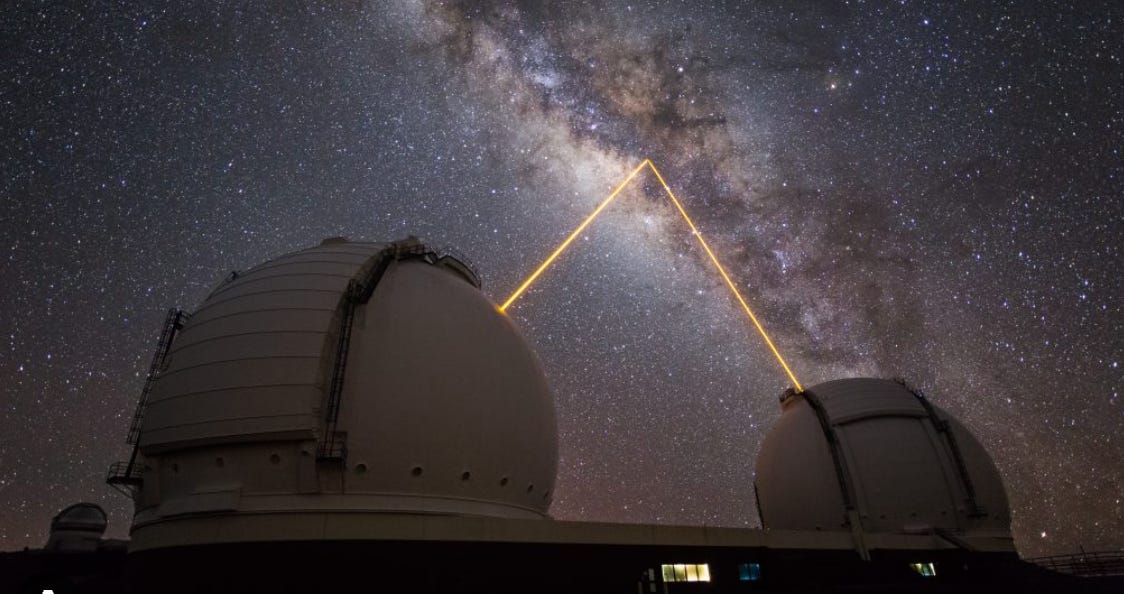
Two 10-meter “eyeballs” sitting at over 13,600 feet atop a dormant Hawaiian volcano, peering deeper into the universe than anything on Earth. Last week, I had a very special opportunity to visit the Keck Observatory on Mauna Kea in Hawaii (thanks Loren!) and what stayed was the way physics, geography, engineering, and human effort all come together in one place.
1. The Single Best Spot on Earth for a Telescope
At nearly 14,000 feet on Mauna Kea, you’re above roughly 40% of Earth’s atmosphere, which meaningfully reduces distortion before the light even reaches the telescope. The mountain itself plays a role. Mauna Kea is a shield volcano, so its gradual slope keeps airflow relatively smooth rather than turbulent. Trade winds tend to push clouds below the summit, and the air is extremely dry, which is especially valuable for infrared observations.
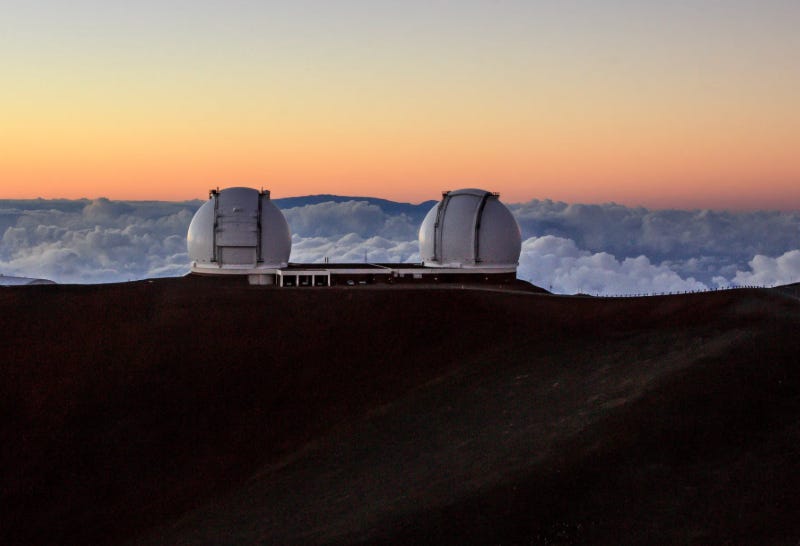
There’s also a practical layer that’s easy to overlook. Despite being remote, the observatory is within driving distance of a skilled workforce—engineers, technicians, and support staff who keep everything running. Location, location, location.
2. The Eyeball Isn’t a Mirror. It’s a Network
Each Keck telescope uses 36 hexagonal mirror segments instead of one monolithic mirror. Each segment is about six feet across and weighs close to 900–1,000 pounds. Together, they are actively aligned to behave like a single 10-meter surface.
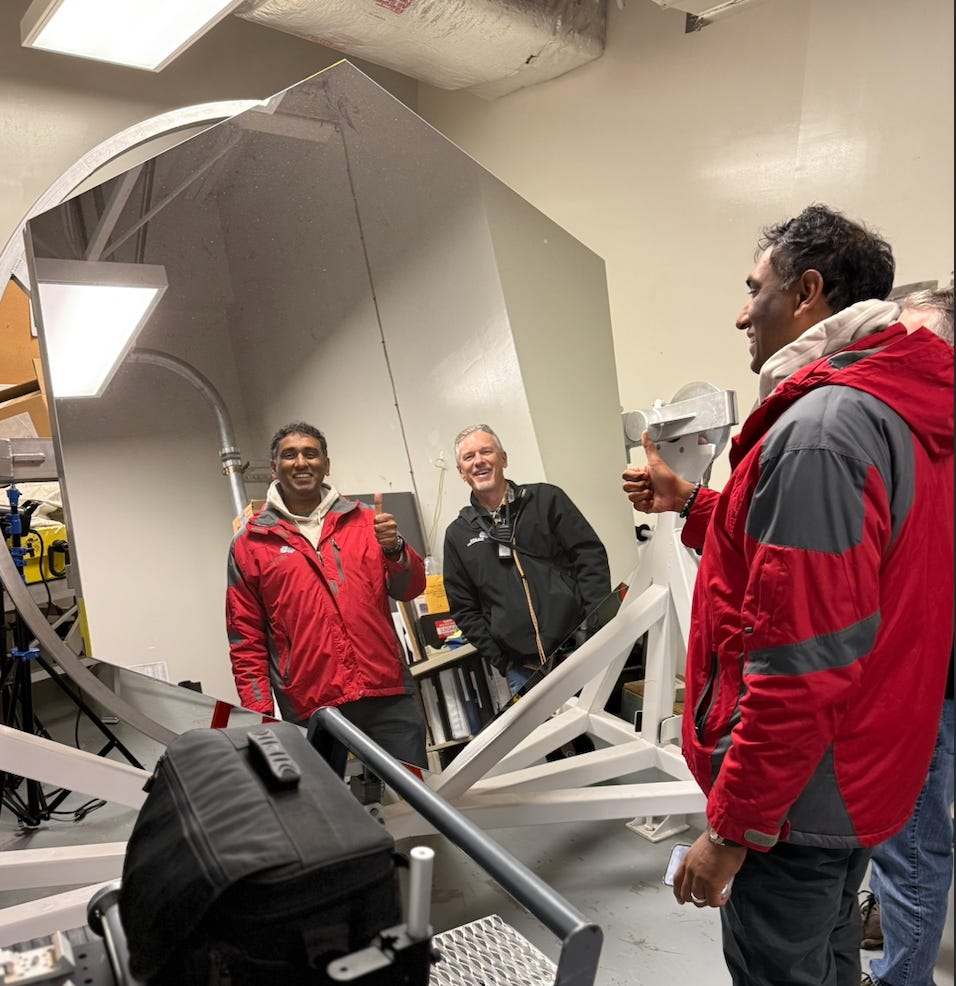
Large mirrors eventually run into physical limits—weight, deformation, manufacturability—so Keck solves this by coordinating many smaller elements in real time. The result feels closer to a distributed system than a single piece of hardware, with constant adjustments to maintain a unified optical surface.
3. Software Correcting Physics
Even at this altitude, the atmosphere still introduces distortion. Incoming starlight gets slightly blurred as it passes through turbulent air. Without correction, the performance gap between a backyard telescope and a much larger instrument would be narrower than you might expect.
Adaptive optics changes that. A deformable mirror adjusts its shape thousands of times per second to counteract atmospheric turbulence. The system measures the distortion and compensates for it in real time, restoring sharpness that would otherwise be lost.
This capability has enabled some of the most important scientific work done at Keck, including the observations that led to the Nobel Prize-winning discovery of the supermassive black hole at the center of the Milky Way. I wrote more about that here:

4. This Is Also a Factory
One of the more surprising aspects of Keck is how much ongoing work happens on-site. The mirrors are not static assets. Each segment is periodically removed, stripped, and recoated with a fresh aluminum layer only about 120 nanometers thick, then reinstalled and precisely aligned.
All of this happens at 14,000 feet. There’s a full operational ecosystem on the mountain—mechanical shops, technical staff, and processes designed for continuous upkeep. The observatory runs most nights of the year, and maintaining that level of performance requires constant attention.
5. The Journey Up (a.k.a. Oxygen Is Optional)

The experience of getting there makes the system more tangible. You stop first at Hale Pōhaku, around 9,000 feet, to acclimate. From there, the drive continues up to about 13,600 feet.
The change in atmosphere is noticeable. Barometric pressure drops from ~1,000 hPa at sea level (14.7 psi) to around 600 hPa at the summit—about a 40% reduction.
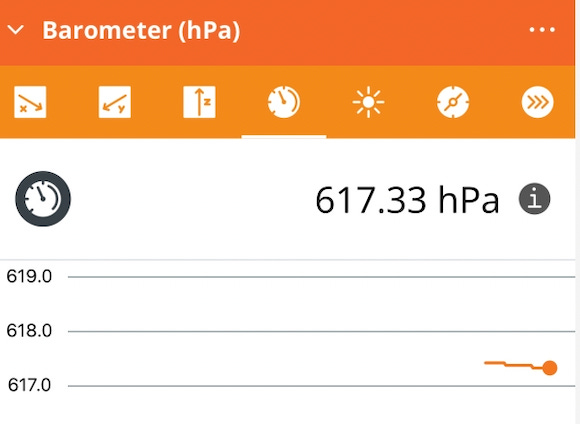
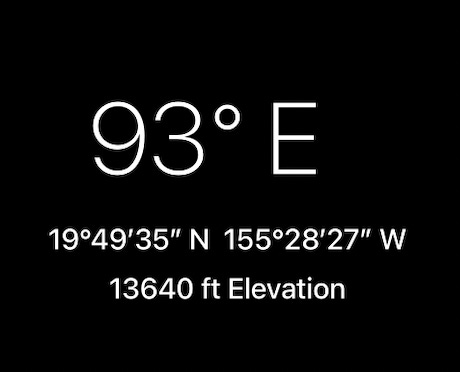
Movement slows a bit. You become more aware of each step. Then you walk inside and see the primary mirror up close.
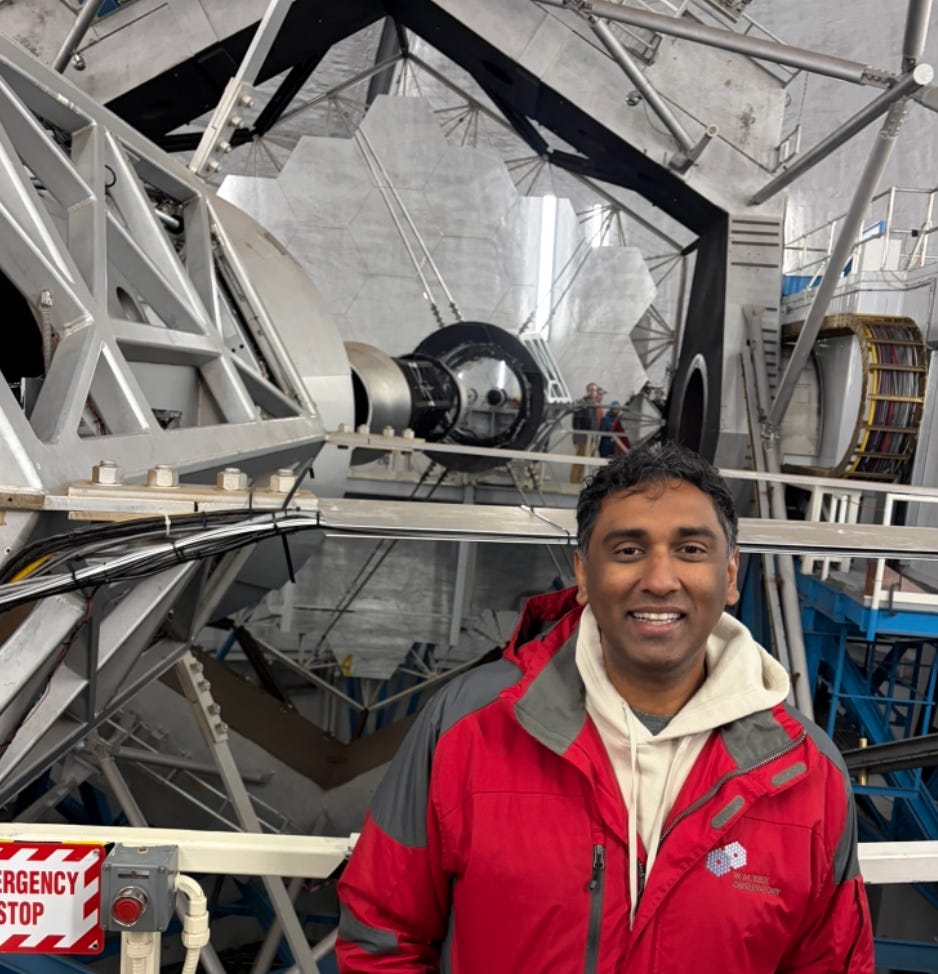
It’s hard not to pause. Thirty feet of precision, perfectly aligned to enable us to see the other side of the universe.
6. Small Human, Big Machine
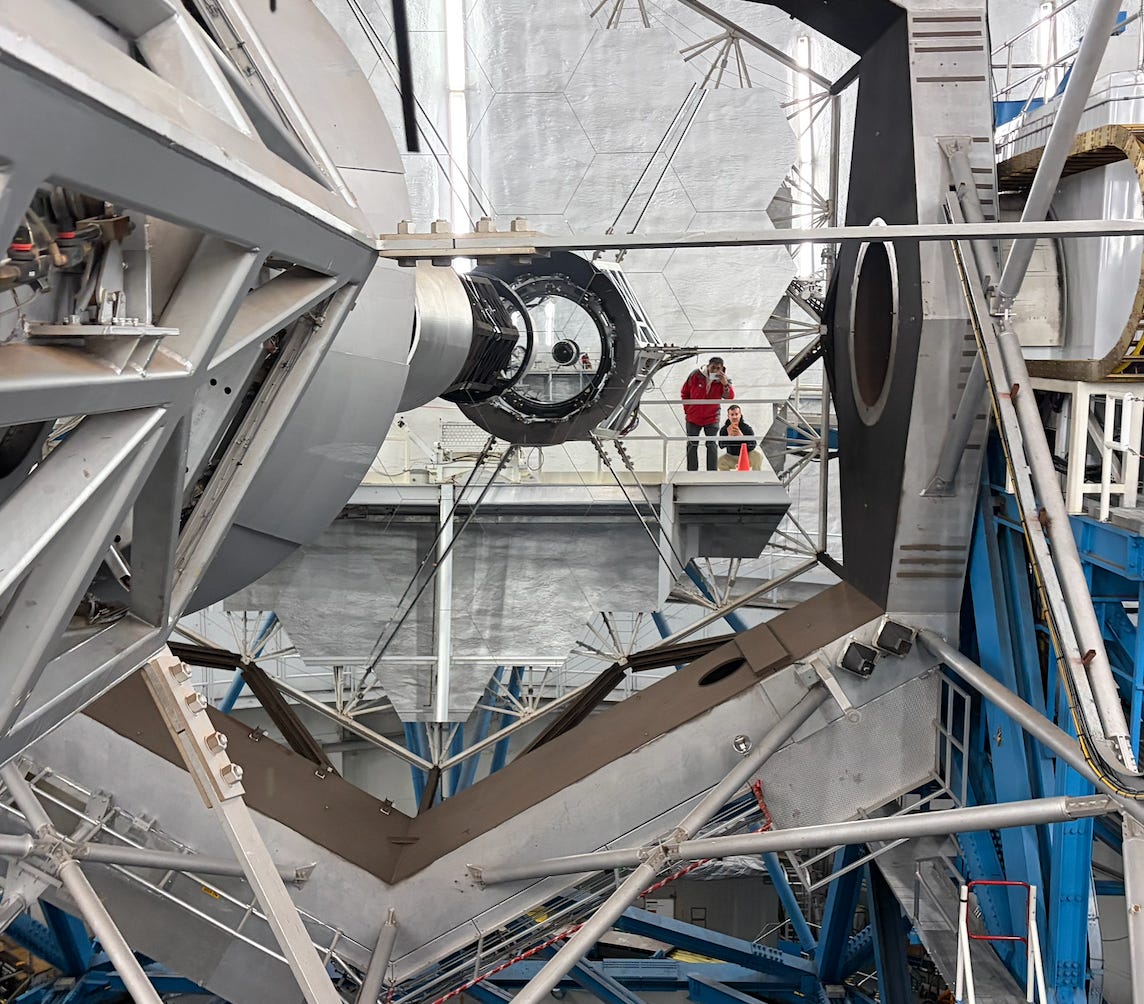
One moment that stuck with me was seeing my own reflection in the mirror—small, almost easy to miss. It’s a reminder of the scale of the instrument and the scale of what it’s designed to observe.
7. What Keck Has Actually Done
Keck is also one of the most scientifically productive observatories in the world. Over the past few decades, it has contributed to a wide range of discoveries, including:
The supermassive black hole at the center of the Milky Way
Precise tracking of stellar orbits (Andrea Ghez, Nobel Prize 2020) — see our UBQT blog post about this
Exoplanet confirmation at scale
Radial velocity measurements helping confirm thousands of Kepler candidates as real planets around other stars
Characterization of exoplanet atmospheres
Detecting chemical signatures such as water vapor
Observations of distant galaxies in the early universe
Extending our understanding of how galaxies form and evolve
The observatory has been operating since the 1990s and continues to play a central role in modern astronomy.
8. The Outside View
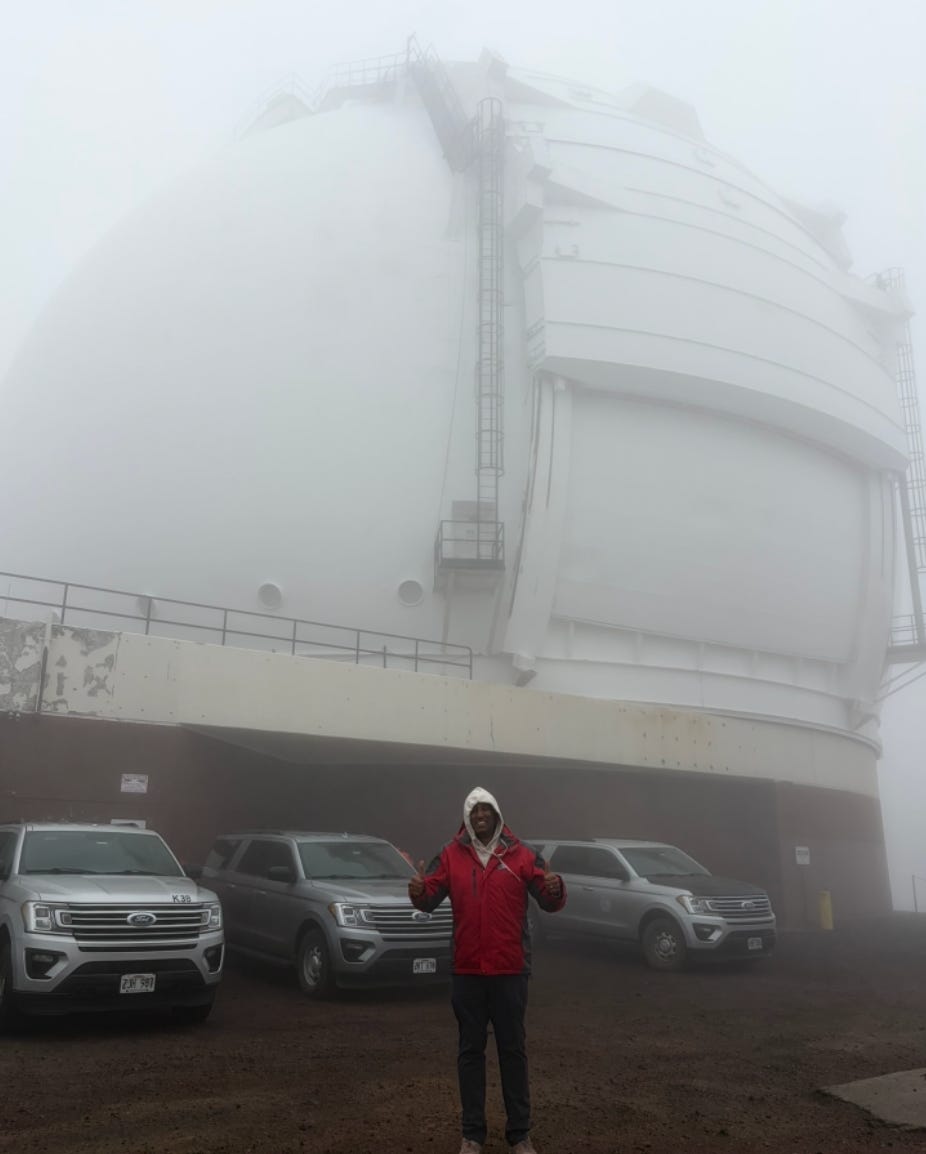
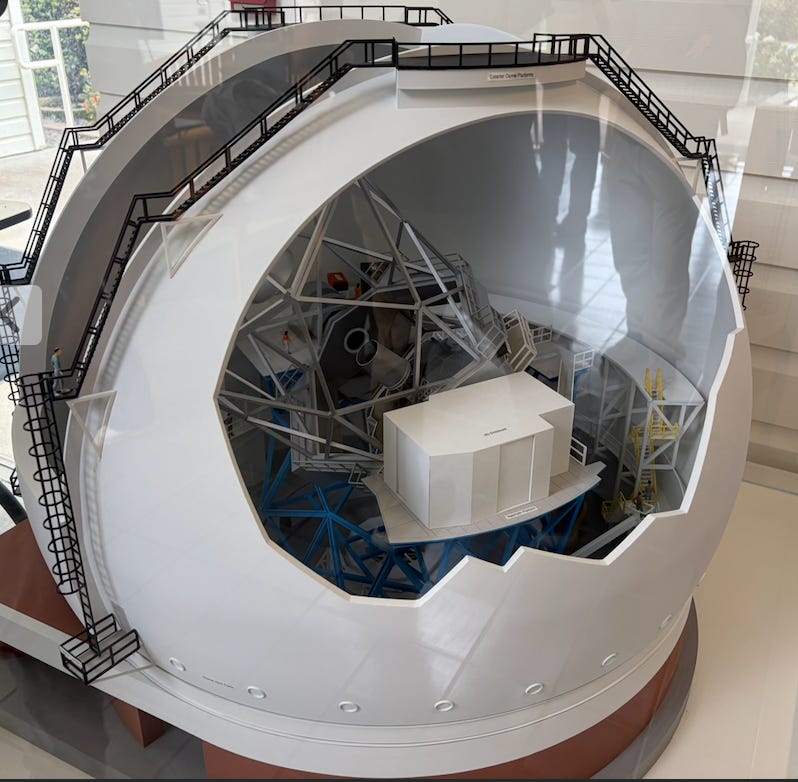
From the outside, the telescope is a dome on a mountain. Inside, it’s a tightly coordinated system built to extract signal from noise with extraordinary precision.
Final Thought: This Is What Deep Tech Looks Like
Keck has remained at the forefront for decades through a combination of thoughtful site selection, materials science, mechanical design, control systems, software, and ongoing operational discipline — something that became incredibly clear to me after spending the day with the scientists and engineers that run this amazing facility. It’s a reminder that progress often comes from integrating many layers of expertise rather than relying on a single breakthrough.
If you want a concrete example of software meeting the physical world in a meaningful way, Keck is a good place to start.
Ubiquity Ventures — led by Sunil Nagaraj — is a seed-stage venture capital firm focused on startups building software that reaches into the real world. In a screen-obsessed world, we focus on "software beyond the screen" startups, which include technology companies that apply AI, software, and smart hardware to physical problems and systems that you can touch, hear, and feel.
If your startup fits this description, reach out to us.
Thanks for writing this! Lot of fun to read and see. this led me down a rabbit hole where I found two more things that delighted me:
1. The "Laser Guided Star" technique by the two telescopes that shoot lasers into the sky to excite the layer of sodium in our atmosphere (what?!?) which then plays into the adaptive optics feedback loop. So much awesome.
2. The two telescopes and their ~85 meter spacing from each other enable interferometry by comparing the signals that they're each receiving to each other, which then enables the pair to act in some ways almost as if they are an 85 meter diameter telescope.
So cool.