

Ubiquity Backs Eclipse Space: A Starlink Alternative Countries Can Control
Eclipse Space has emerged from stealth to give countries and carriers their own small satellite communication constellation, built by the team that scaled Starlink.
Picture a country that wants its own satellite internet and doesn’t want to rent it from one company. For years the choices were to build a constellation of thousands of satellites, which almost nobody can afford, or to depend on Starlink and accept that the network, the pricing, and the off switch all sit somewhere else.
Redmond, WA-based Eclipse Space opened up a different path.
A customer gets their own turnkey constellation that they own, operate and control themselves, rather than a service owned by someone else.
The first time Eclipse Space CEO Derek Huerta walked me through it, I kept waiting for the catch. A constellation a fraction the size of Starlink or Amazon Leo, at a fraction of the cost, doing the same job for a single country. It sounds like it shouldn’t work, until you follow the engineering down and see the tradeoffs they made to get there.
That afternoon turned into exactly the kind of conversation I started Ubiquity Ventures to have, a founder so far into the innards of his own system that I left understanding satellite networks better than I did walking in.
Derek is the rare founder who helped build the technology at the center of an entire category. He spent seven years at SpaceX developing the satellite payloads behind Starlink, including leading the team that built the phased array antennas connecting those satellites to the ground, and he drove that hardware from prototype to 200 units a week.
He has seen from the inside what countries and carriers actually need, and he knows which parts of the established approach to keep and which to rethink. That’s the founder-market fit I look for.
He co-founded Eclipse in 2025 with Kyle Leveque to share megaconstellation technology with the world. To do that, they designed a company that owns the architecture and the software while partners around the world build the hardware, closer to how Apple makes the iPhone than how a traditional satellite maker works. Even before Eclipse said a word in public, governments across Europe, Asia, and the Middle East were expressing interest.
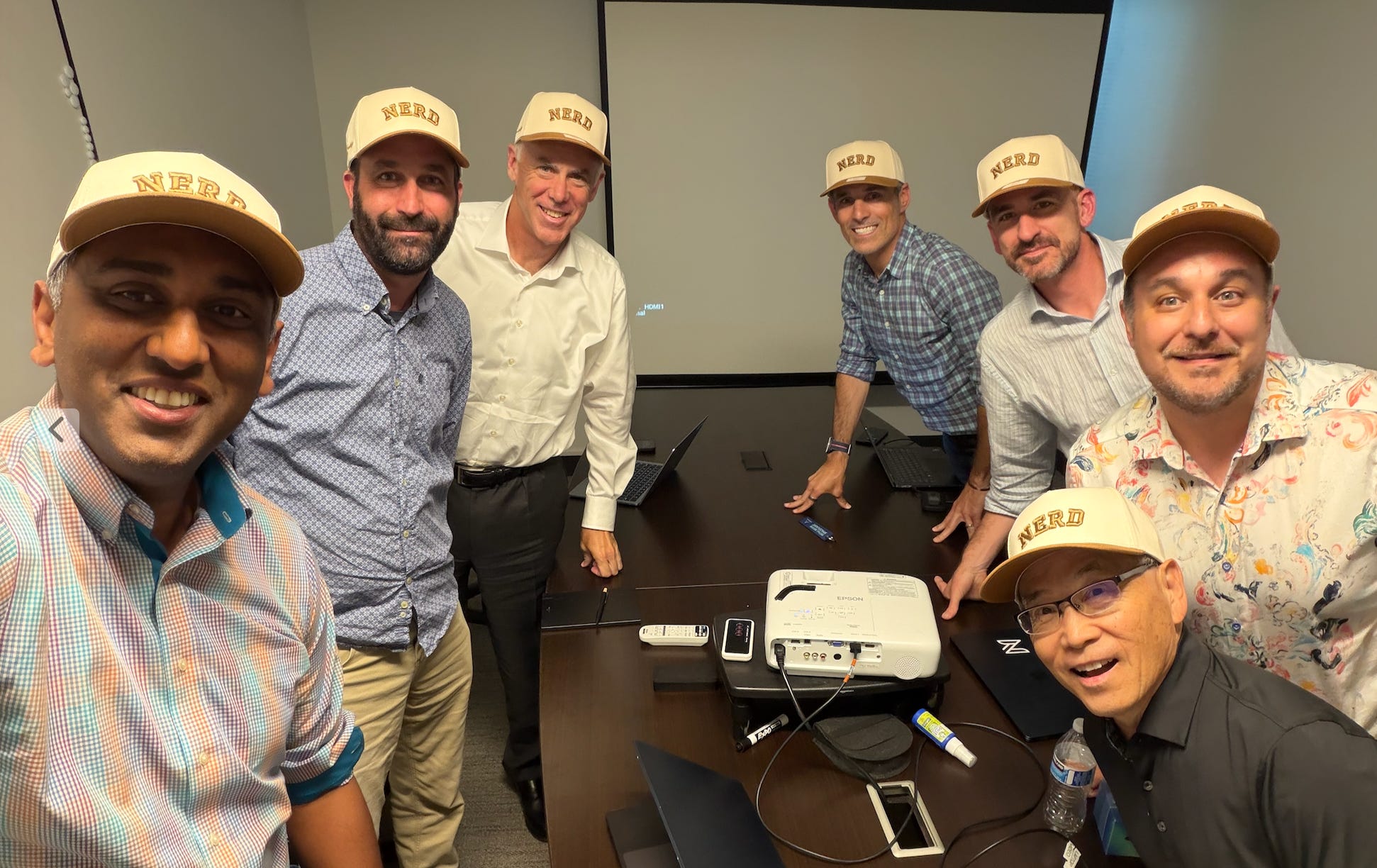
What’s more, I’ve known co-founder Kyle Leveque for more than 10 years through our shared obsession as space nerds, and have nearly invested in several of the startups he’s worked at. We stayed in touch through space conferences over the years, built a deep mutual respect, and by the time he started this company, partnering together felt long overdue.

Eclipse is squarely where Ubiquity invests, software beyond the screen and out in the physical world, in a category most people still think of as off limits to anyone but the giants.
We’ve backed space companies like Loft Orbital and Muon Space for the same reason. The interesting work in space keeps happening a little off the beaten path, in the gap between what the big players offer and what their customers actually want to own.
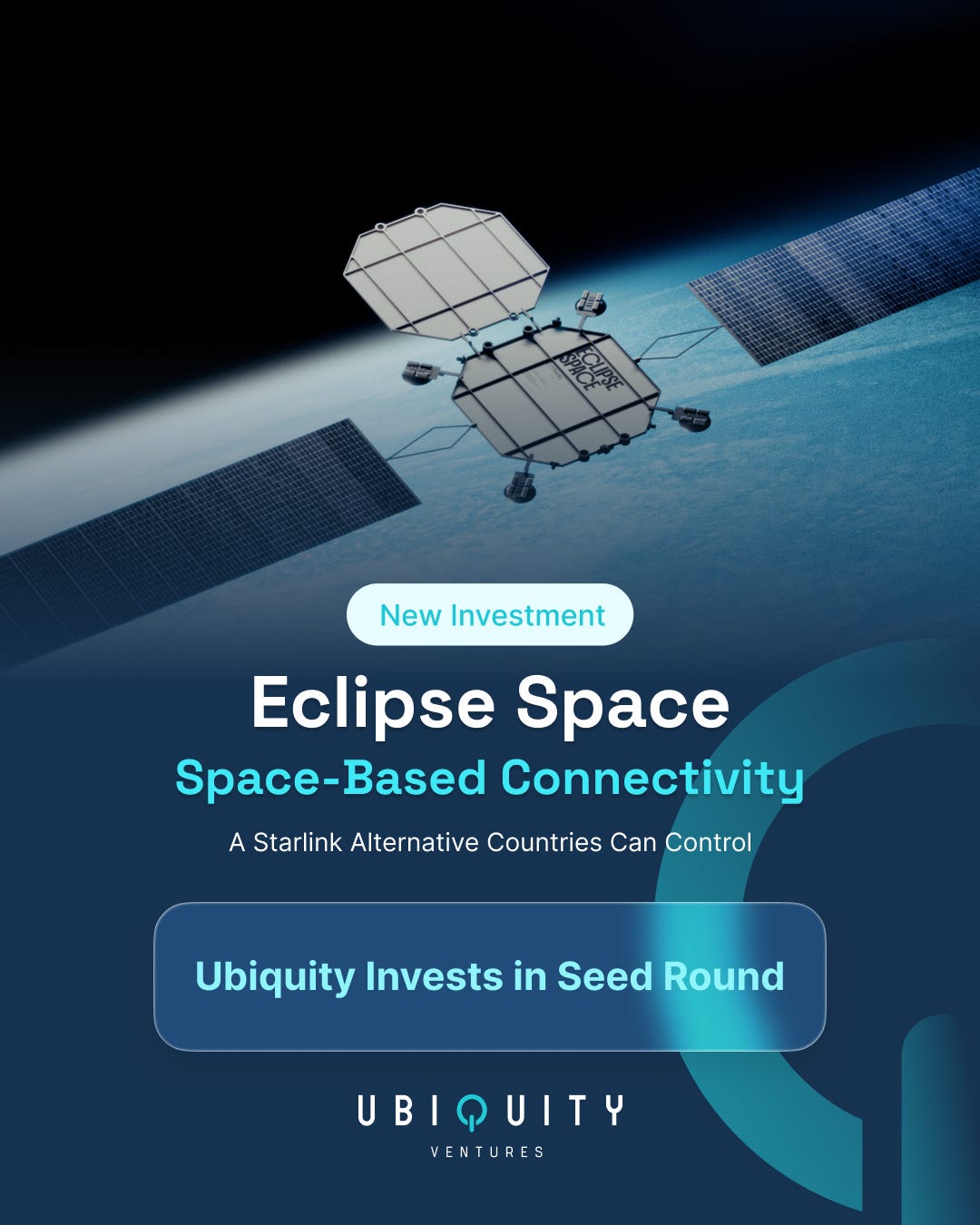
We’re early investors in Eclipse, alongside Space Capital and Tectonic Ventures. You can read the full announcement here.
Ubiquity Ventures is a seed-stage venture capital firm investing in software beyond the screen. We back founders building AI, software, and smart hardware for the physical world — technology you can touch, hear, and feel.
If you know a founder working on something nerdy and early, we’d love an introduction.