

What Starlink Is Actually Worth (and Where We Go From Here)
We just opened up a private session we ran in April with one of the sharpest analysts in space, and his read on today's IPO surprised me.
Yesterday SpaceX priced at around $1.75 trillion, the biggest public offering ever attempted, and is now trading above $2 trillion on the Nasdaq!
Back in April, before anyone outside a small room could buy a share, I sat down with Chris Quilty to answer one question:
What is Starlink actually worth?
I kept that session private at the time. It was for our LPs only. With yesterday’s news it feels like the right moment to open it up.
A few things from that hour have stuck with me.
Chris and his team built their Starlink model from the ground up. They pulled every FCC gateway filing. They estimated the business component by component, headcount by function, state by state. When the filing went public, he told me their numbers had come in within a few percent.
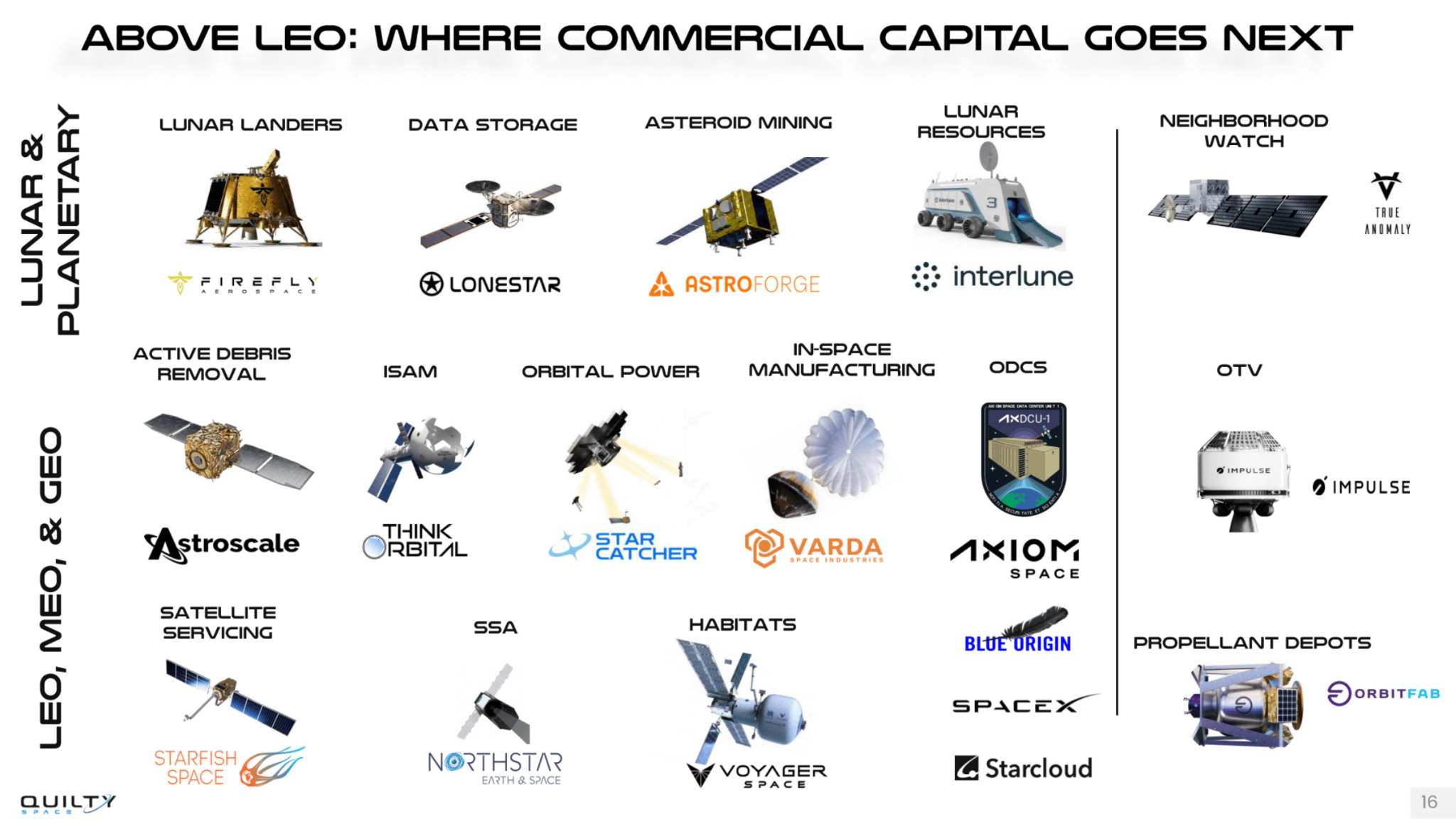
And his opinion on the IPO surprised me. He called it almost a non-event. SpaceX never struggled to raise money, and going public will not change how they operate. The bigger story, the one worth your attention, is forming above the IPO. A nascent space economy is maturing. Debris removal. Orbital power. Manufacturing in orbit. Lunar resources. Refueling depots. Even data centers in space. Most of it early, some of it leaning on government as the first customer, all of it real enough to track.
We spent real time on the question everyone is asking:
Does a company this large actually have a moat?
Chris’s answer was that there is no single thing. It is the culture, and how they solve problems from first principles. The first satellites used solar panels from Home Depot and a vending machine cooling system. They prefab their ground gateways in a factory, pour the concrete pedestals, truck the whole thing out to a scraped patch of land, and light it up. Cheap where it can be, redundant where it matters, and it works.
We dove a lot deeper into SpaceX’s Culture as a Moat in our Ubiquity University module with former SpaceX engineer Brannon Jones (who is now a fellow deeptech VC). Read our summary or watch the full 17-minute video now:
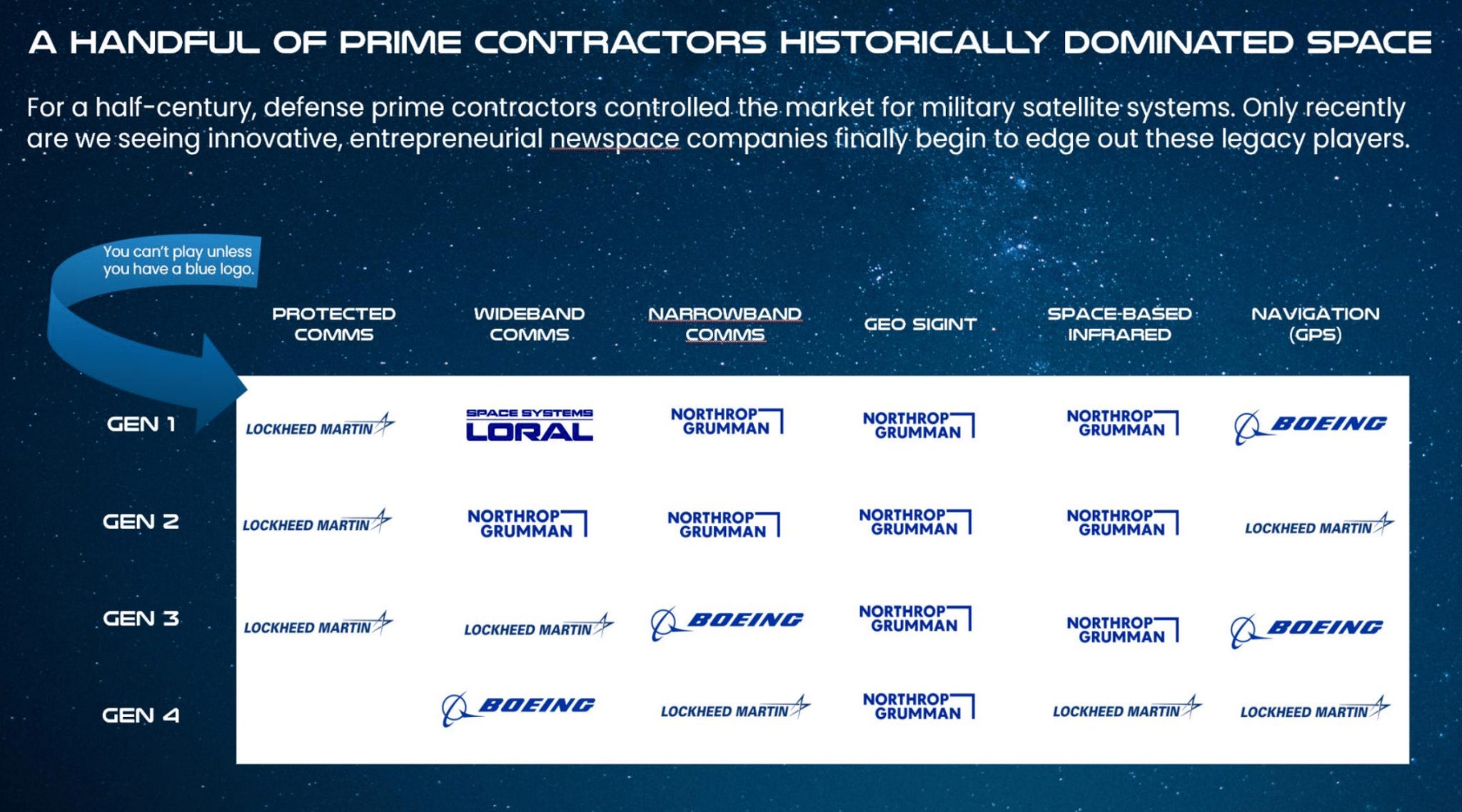
For fifty years, military space ran on a short list of prime contractors. The joke in the room was that you couldn’t play unless you had a blue logo. That is finally changing, and the newcomers are the whole reason we find this sector so interesting.
The scale is hard to wrap your head around. Outside of the recent AI companies, Starlink reached ten billion in revenue faster than almost anyone. There was an eighty day stretch last year where they added a million subscribers. They now build around nine million user terminals a year and hand many of them out for free. It took fifty five years after Sputnik for the world to put its first thousand satellites in orbit. SpaceX is on track to launch roughly thirty five hundred this year alone.
I have backed early-stage space startups for almost 15 years, going back to leading an early round in Rocket Lab when it was valued under $50 million (today the company is worth over $50 billion). Space is software beyond the screen taken to its furthest edge. Smart hardware solving a high stakes problem in one of the most overlooked sectors there is. One foot in today and one foot in tomorrow. Watching a company go from a crazy idea to the largest offering in market history is a good reminder to stay nerdy and early.
Here are 2 parts of the Ubiquity Ventures event from April. Worth the watch if you want the analysis behind the number everyone is thinking about today.
Part 1: 9-minute Space 101 Primer with Sunil
In this brief video, we go into the basics of space: How we utilize space, the 3 major segments of the space economy, LEO vs. GEO orbits, launch vehicle dynamics, and more:
Part 2: Starlink Analysis and Resulting Space Opportunities with Chris & Sunil
In this video, Chris Quilty analyzes Starlink’s overall performance, the various Starlink customer segments (maritime, aviation, defense, mobile/direct-to-cell). Then Chris and Sunil explore the resulting opportunities and implications for the broader space economuy.
Huge thanks to Chris and the team at Quilty Space. If you want space research at this level, they are the source. You can find them at quiltyspace.com.
Ubiquity Ventures is a seed-stage venture capital firm investing in software beyond the screen. We back founders building AI, software, and smart hardware for the physical world — technology you can touch, hear, and feel.
If you know a founder working on something nerdy and early, we’d love an introduction.