

Eclipse Space Wants to Be the Android of Satellite Constellations
A candid conversation with Eclipse Space co-founder Kyle Leveque, one week after coming out of stealth
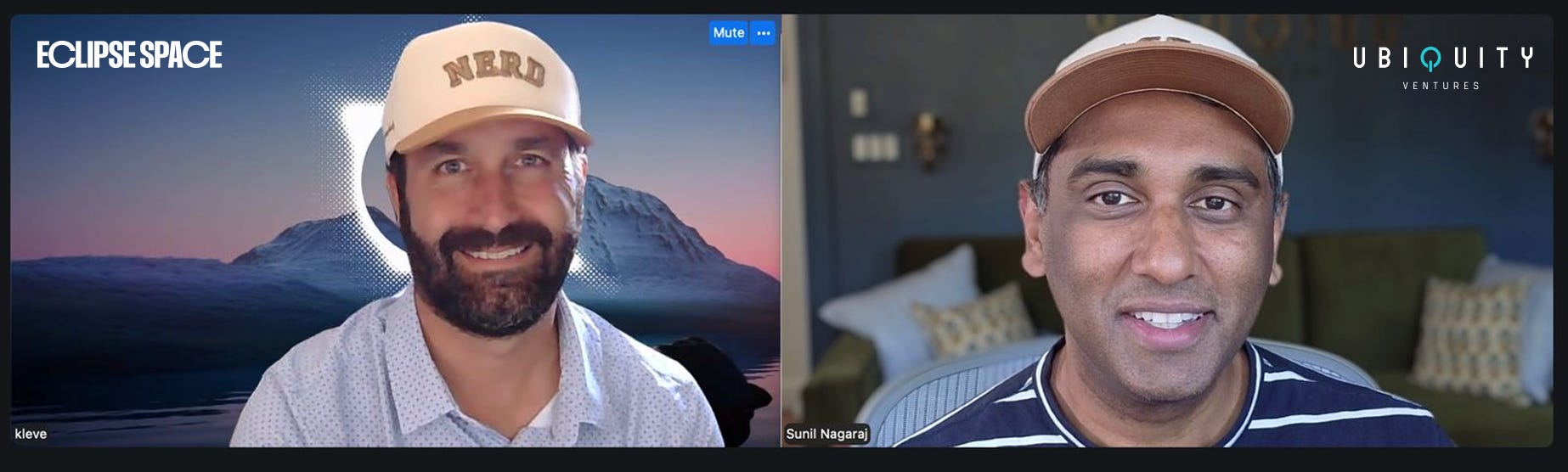
Last week, Eclipse Space came out of stealth with a bold promise: satellite communication constellations that countries and carriers can own outright, built by the team that scaled Starlink.
I shared why Ubiquity invested, but there was a lot more to say. So I called up co-founder Kyle Leveque, who I’ve known for over a decade, to dig into how this company came to be and where it’s headed.
Kyle, people think VCs and founders meet over warm intros and pitch decks. Ours was different. Where did we actually meet?
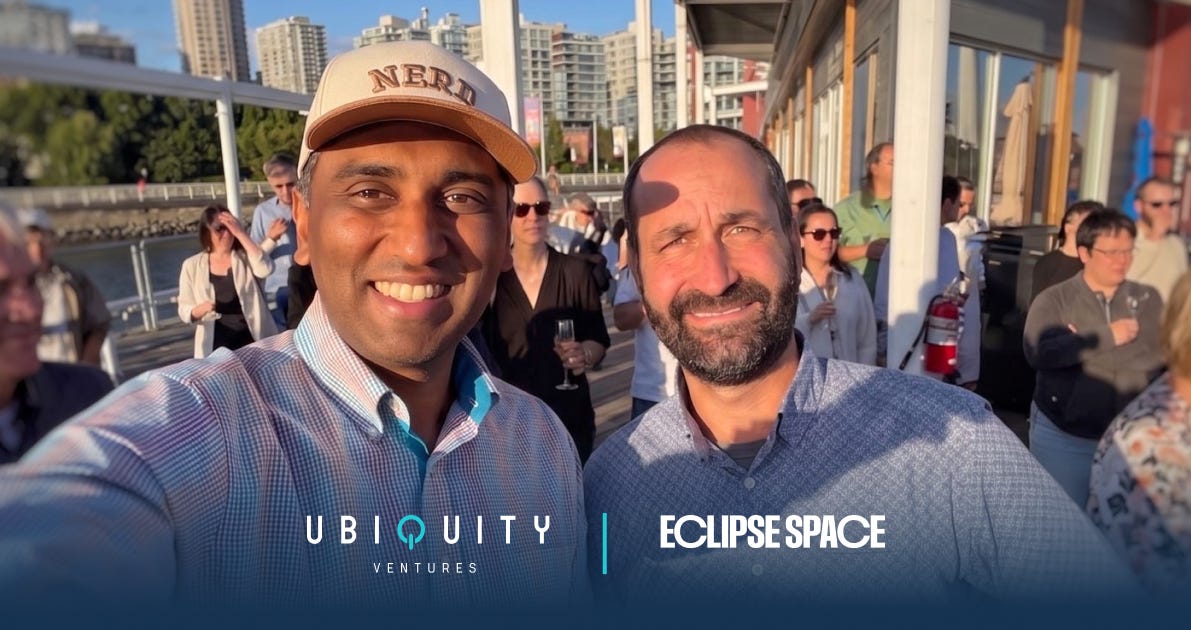
We met at NASA Ames Research Center in 2015. I had just co-founded Aquila Space with Chris Biddy, one of the earlier newspace startups, and we were out fundraising while you were at Bessemer. We knew you had made the Rocket Lab investment because we were building CubeSats and tracking every small launch vehicle. Then at the SmallSat conference that fall, there were zero VCs floating around, but there you were in Rocket Lab’s booth, talking them up.
Mainstream money didn’t really enter space until 2017 or 2018. Before that it was always the off-the-beaten-path investors, which is how we kept ending up in the same rooms.
Fast forward a decade. You’re building Eclipse, and investors are calling. Why did you give me a call?
One thing I learned at my last company is that an investor’s money matters far less than how they can actually help, with advice and guidance as much as connections. I remember seeing you on stage at all the space industry conferences, and your words always resonated with me. It seemed like we looked at the world the same way.
For a while, you would say space felt overheated and you weren’t really investing in it, but you kept coming back anyway. You had made a select few space investments, so your interest in Eclipse was a strong signal that we were really onto something.
I also knew how you coach founders through the early years, which we needed to help round out the team we were building. And where some VCs might want to steer us toward defense tech and a government focus, you don’t take that view.
Half your team came straight from building Starlink. People don’t walk away from that unless they’ve seen something the rest of the industry hasn’t. What convinced you Eclipse had to exist?
What we saw is that demand for connectivity from space is exploding, because so much of the world still sits outside the reach of cell towers and fiber. I originally thought that meant customers would want broadband internet, but it’s coming from mobile. Telcos and countries want satellites that extend their cell networks straight to the phones people already have, which is what a 5G non-terrestrial network does. Today, if you want that connectivity from space, you subscribe to capacity from Starlink or Amazon Leo. It’s the Uber model, you get the ride without owning the car. That works fine for some customers. But a lot of customers fundamentally need to own the car, whether they’re telcos or governments.
The reason these customers can’t own a satellite constellation today is that the world doesn’t understand how to mass manufacture spacecraft cheaply. That’s the real problem underneath all of this, and this team knows how to solve it. Adapting proven manufacturing for space keeps the capital low and puts the factory where the customer needs it. The idea that only a chosen few can build satellites in special factories just isn’t true, and someone needed to unlock that.
Let me push on that. Is this really about the world needing more connectivity from space, or is it about customers wanting an alternative to Starlink?
There’s definitely a big push for an alternative to Starlink. With Starlink and Amazon Leo, you’re forced through a subscription model where you’re leasing capacity and it’s one-size-fits-all. You can’t tailor a constellation for your country, mix civilian and commercial uses, or get the terminals and interoperability you need.
I bought the first iPhone the day it came out, and it was great, but Apple locks you into their ecosystem. People asked back then, what’s the point of Android? Android is what enabled everyone else. There’s still a very big need for the Android of satellite constellations.
You and your Eclipse Space co-founder Derek Huerta were in the room when the CubeSat was invented. What did the industry say when two college kids showed up with a satellite the size of a Rubik’s cube?
They told us it was too small and it would never work. Derek and I were undergrads at Cal Poly together, at the right place at the right time, when the CubeSat was being invented there and at Stanford. We worked on the first Cal Poly CubeSats ever made, back in the 2003 to 2005 timeframe, and stayed in touch ever since.
We got used to being dismissed. We’ve been told “you can’t do it” many times in our careers, and that turned out to be pretty good training for starting a company.
Everyone’s too polite to ask this on stage, so I’ll ask it here. Are we in a space bubble?
Honestly, we might be. It’s always hard to tell how far in you are, and I’ve never seen more excitement in space in my life. We lived through the SPAC era around 2021 and the smaller wave around 2015 after Google acquired Skybox. What I look for is whether a startup is pitching a new technology, or solving a problem for a market that exists today rather than one that requires a moon colony to show up first.
Communications has never really been a bubble for space. Starlink proved megaconstellations can serve millions of subscribers, and even the first internet packets traveled from Palo Alto across the ARPANET and then over a satellite link to London. The real question now is how high the ceiling goes. LEO brings latency down and we can finally deliver meaningful bandwidth to handheld phones. Space can and will be part of the 6G story, for phones but also cars, trains, airplanes, and boats, and being at the front of that is exactly where Eclipse wants to be.
Thanks to Kyle for letting me share this conversation. If you want to see what they’re building, keep an eye on eclipse.space. Knowing this team, the next decade will be fun to watch.
Ubiquity Ventures is a seed-stage venture capital firm investing in software beyond the screen. We back founders building AI, software, and smart hardware for the physical world — technology you can touch, hear, and feel.
If you know a founder working on something nerdy and early, we’d love an introduction.